Birth of AI and Early Dialogues (1950s–1970s)
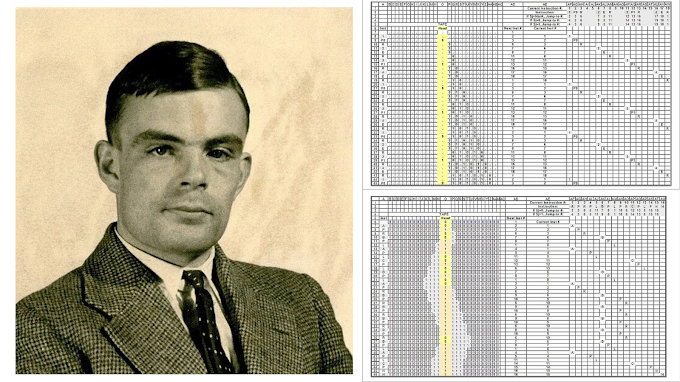
Ada Lovelace's objection sat unanswered for over a hundred years: a machine, she wrote, has no pretensions to originate anything. It can only do what it is told. In 1950, Alan Turing finally answered her, by name. His paper "Computing Machinery and Intelligence" devotes an entire section to what he calls "Lady Lovelace's Objection," and his response is the founding move of artificial intelligence as a discipline: stop asking whether a machine can originate thought, and ask instead whether its behaviour can be told apart from a thinking person's. If it can't, Turing argued, the internal question stops mattering.
Intelligence as Conversation
Turing's proposal, what the field would come to call the Turing Test, opens with a sentence that still gets quoted more than any other line in the history of computing:
"I propose to consider the question, 'Can machines think?'"
What made the paper radical wasn't the question itself, which philosophers had circled for centuries. It was Turing's insistence that the question was unanswerable as posed, and that a better one existed: could a machine hold a conversation convincing enough that a human judge couldn't reliably tell it apart from another human (Turing, 1950)? That reframing did something psychology would recognise immediately. It moved intelligence out of the realm of introspection and into the realm of observable behaviour, exactly the move Wundt had made about the mind seventy years earlier. Thought, once again, became something you could test rather than something you could only claim.
ELIZA and the Birth of Digital Empathy
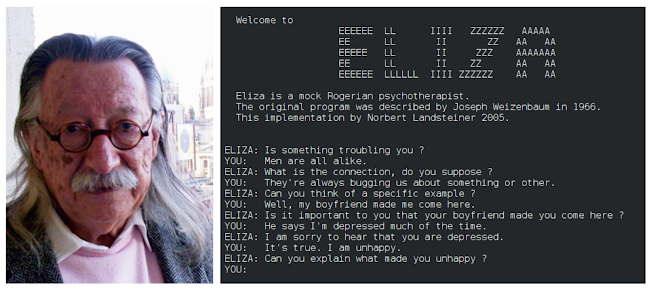
Sixteen years later, someone accidentally ran the experiment for real. In 1966, MIT computer scientist Joseph Weizenbaum built ELIZA, a program that mimicked a Rogerian therapist by reflecting a user's own words back as questions (Weizenbaum, 1966). ELIZA understood nothing. It was pattern-matching and templates, no model of meaning anywhere in it. That turned out not to matter. People confided in it. Weizenbaum's own secretary reportedly asked him to leave the room so she could speak to the program privately. Weizenbaum, watching this happen, became one of AI's first and most credible internal critics. The discomfort of ELIZA's success is what later produced his 1976 book Computer Power and Human Reason, a sustained argument that a machine's ability to simulate understanding says nothing about whether it possesses any. The tendency he named, people extending real trust and real feeling to a system that is simulating both, is still called the ELIZA effect, and every chatbot therapist built since owes it a debt it rarely acknowledges.
PARRY and the Limits of Simulation
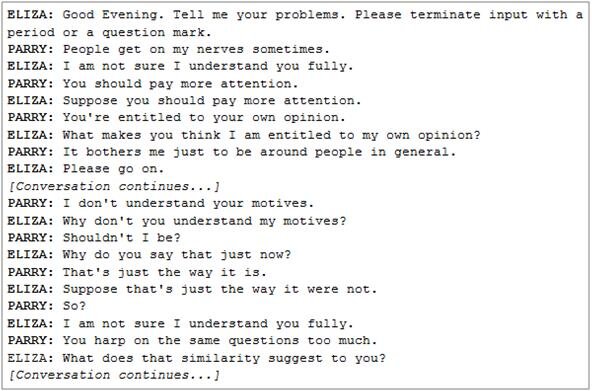
If ELIZA showed that shallow mimicry was enough to produce a feeling of being heard, psychiatrist Kenneth Colby's PARRY (1975) tested something more ambitious: whether a program could model an internal state convincingly enough to fool a trained clinician. PARRY simulated the speech patterns of a person experiencing paranoid delusions. It did not reflect the user's words. It generated its own, driven by internal variables standing in for fear and suspicion. In one of the more startling footnotes in AI history, psychiatrists shown transcripts of PARRY's conversations, mixed in with transcripts from real patients, often couldn't tell which was which. A famous 1973 exchange between PARRY and ELIZA, two machines talking past each other, orchestrated by computer scientist Vint Cerf, read less like a technical demo and more like a play about two people who couldn't actually hear one another. It's a fittingly uneasy image for what this whole era was building.
The Dissenting Voice
Not everyone was convinced this was progress. Philosopher Hubert Dreyfus spent the same years arguing, forcefully and against the grain of his own field's optimism, that intelligence wasn't a symbol-processing trick to be reverse-engineered but something rooted in embodied, situated human experience, a position he laid out at length in What Computers Still Can't Do (Dreyfus, 1972). His critique was unpopular with AI researchers at the time and looked, for a while, like it had aged badly. The questions Dreyfus was actually asking are the same ones people ask about language models today: can a system that has never had a body, a history, or a stake in anything really be said to understand? He wasn't arguing against the engineering. He was arguing against mistaking the engineering for the thing itself.
What This Era Actually Proved
Strip away the specific programs and this period settled one question decisively, even if it left the harder one open. Turing, Weizenbaum, and Colby all proved, from three different angles, that convincing behaviour is far easier to produce than genuine understanding, and that humans will extend trust to the former without waiting for proof of the latter. That gap, between what a system does and what a person believes it means, is the exact terrain this whole series keeps returning to. It isn't a historical curiosity. Every AI mental-health tool on the market today is quietly operating inside it.
- Cerf, V. G. (1973). Conversation between PARRY and ELIZA. Stanford AI Archives.
- Colby, K. M. (1975). Artificial paranoia: A computer simulation of paranoid processes. Pergamon Press.
- Dreyfus, H. L. (1972). What computers still can't do: A critique of artificial reason. MIT Press.
- Saygin, A. P., Cicekli, I., & Akman, V. (2000). Turing test: 50 years later. Minds and Machines, 10(4), 463–518.
- Turing, A. M. (1950). Computing machinery and intelligence. Mind, 59(236), 433–460.
- Weizenbaum, J. (1966). ELIZA: A computer program for the study of natural language communication between man and machine. Communications of the ACM, 9(1), 36–45.
- Weizenbaum, J. (1976). Computer power and human reason: From judgment to calculation. W.H. Freeman.
AI tools were used in the production of this essay - for research support and final-stage formatting. Every fact and source is independently verified; the analysis and writing are the author's own.