Foundations: Mapping the Mind (1800s–1950s)
In 1879, Wilhelm Wundt opened a small laboratory in Leipzig and did something that sounds unremarkable now and was radical then: he timed people's reactions. How long it took to notice a sound, to name a colour, to press a key after a light flashed. Philosophy had argued about the nature of mind for two thousand years without ever putting a stopwatch to it. Wundt's laboratory made a quiet, consequential bet. Thought was not just a subject for argument. It was a process with a shape, one that could be caught in numbers. That bet is the real starting point of this series. Everything artificial intelligence later assumed about minds, that they run on processes, that those processes have structure, that structure can be modelled, starts here, decades before anyone had a machine capable of running the model.
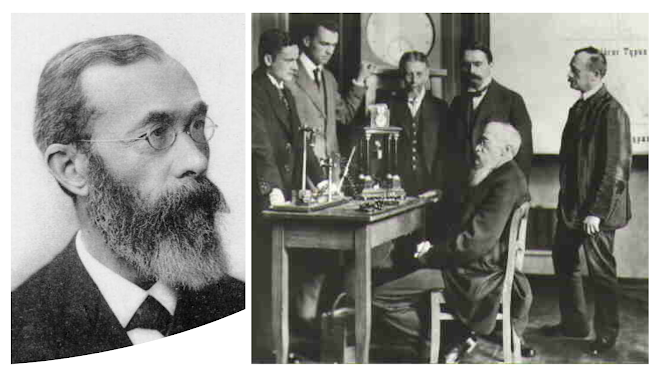
William James, writing in Boston a decade later, pushed the same instinct in a different direction. His Principles of Psychology (1890) treated consciousness less as a fixed structure to be dissected and more as a stream: continuous, functional, adaptive, always doing something for the organism that had it. James's functionalism asked not just what the mind is made of, but what it is for. What is a given mental process actually doing, and could something else do the same job? That is still the question every AI research paper about cognition is implicitly asking, whether or not it credits James for asking it first.
Mapping the Unconscious
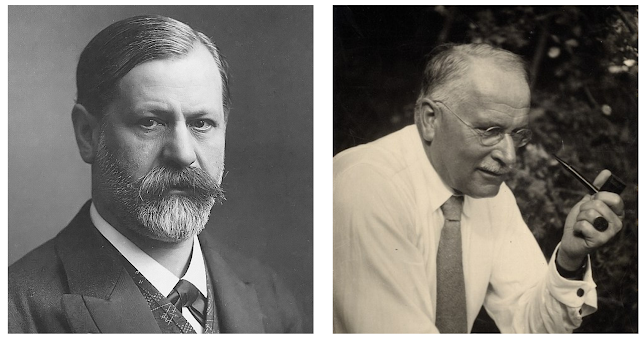
Sigmund Freud took the opposite approach to Wundt's stopwatch. If Wundt made the mind measurable by watching what it did, Freud made it legible by studying what it hid. His model, id, ego, superego, a mind built from competing drives rather than a single unified will, is easy to summarize and easy to underrate. Strip away the specific mechanics and what's left is a genuinely early version of an idea AI research now treats as a hard problem: a system's outputs can be observed in detail while its internal processes stay unreachable, inferred rather than seen. Freud never used the word "black box." He didn't need to. He built one out of the human mind and spent thirty years trying to read its logs indirectly, through slips, dreams, and symptoms.
Carl Jung, Freud's student and later his most consequential critic, took the black box further still, arguing that some of its contents weren't personal at all. A layer of shared symbol and pattern, the collective unconscious, sat beneath individual memory (Jung, 1964). Whether or not the theory survives contact with modern cognitive science, the instinct behind it, that minds run on inherited pattern libraries and not just personal experience, anticipates, uncannily, the way a trained model draws on patterns it was never individually taught but absorbed wholesale from a larger corpus.
The Mechanical Metaphor
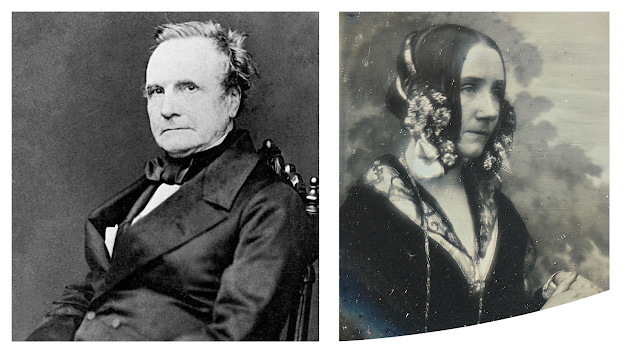
While psychology was deciding the mind could be measured, mathematics was quietly proving that reasoning could be mechanised. In the 1830s Charles Babbage designed the Analytical Engine, a machine built not to calculate one fixed thing but to follow instructions: the first design, on paper, for what we'd now recognise as a general-purpose computer (Babbage, 1864). Its collaborator and interpreter, Ada Lovelace, understood exactly what that generality did and didn't mean, and said so with a precision that still holds up:
"The Analytical Engine has no pretensions whatever to originate anything. It can do whatever we know how to order it to perform."
That single sentence, written in 1843, is the first recorded argument about the limits of machine intelligence, made over a century before anyone had a machine capable of testing it. The next essay in this series picks the argument back up almost exactly where Lovelace left it, in a room with Alan Turing in 1950.
Two Sciences, One Question
Wundt and Babbage never met. Freud and Lovelace never read each other. Psychology and computation spent this entire era developing on separate continents of thought, answering to different institutions, publishing in different languages of proof. And yet both were converging on the same underlying claim, arrived at independently and for different reasons. The mind, measured, mapped, or mechanised, was not a mystery exempt from explanation. It was a system. Systems can be studied. Some, eventually, can be built.
That conviction, more than any single experiment or design, is what this foundational era actually left behind. Everything the rest of this series covers, Turing's early dialogues, the first therapy chatbots, the AI companions people now confide in at 2 a.m., is downstream of a decision made quietly, separately, in the 1800s. The space between a thought and a mechanism might be narrower than anyone had previously been willing to claim.
- Babbage, C. (1864). Passages from the life of a philosopher. Longman, Green, Longman, Roberts, & Green.
- Freud, S. (1917). Introductory lectures on psycho-analysis (J. Strachey, Trans.). W.W. Norton & Company.
- James, W. (1890). The principles of psychology (Vols. 1–2). Henry Holt and Company.
- Jung, C. G. (1964). Man and his symbols. Dell Publishing.
- Lovelace, A. (1961). Notes by the translator (Original work published 1843). In B. V. Bowden (Ed.), Faster than thought: A symposium on digital computing machines (pp. 94–117). Pitman.
- Wundt, W. (1902). Grundzüge der physiologischen Psychologie [Principles of physiological psychology]. Wilhelm Engelmann. (Original work published 1874)
AI tools were used in the production of this essay - for research support and final-stage formatting. Every fact and source is independently verified; the analysis and writing are the author's own.