Parallel Frontiers: Early Telepsychiatry and Remote Care (1950s–1970s)
Weizenbaum's worry, in the last chapter, was that a machine with no understanding at all could still make people feel understood. Presence could be counterfeited. At almost exactly the same moment, a much quieter experiment was running in the opposite direction. In 1959, the Nebraska Psychiatric Institute began broadcasting group therapy and clinical training over closed-circuit television to a distant state hospital (Bashshur & Shannon, 2009). No one was trying to simulate a therapist. A real one was simply appearing on a screen instead of in a room. The question this raised wasn't whether the machine understood anything. It plainly didn't; it was just a wire. The real question was whether the relationship on the other end of that wire could survive the distance intact.
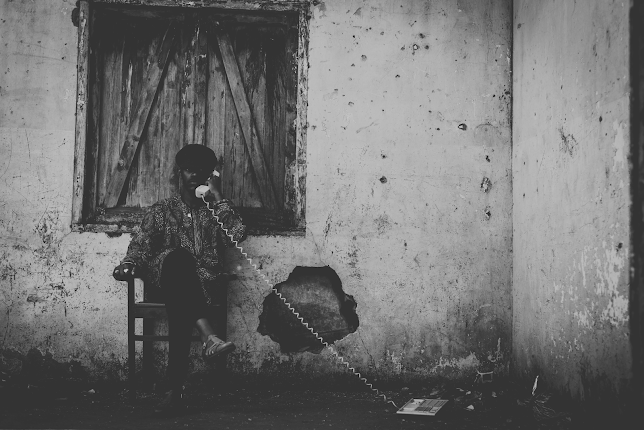
The First Remote Therapies
It could. That was the finding, and it was not obvious in 1959. A decade later, psychiatrists at Massachusetts General Hospital extended the same logic somewhere stranger: a real-time video link to Boston's Logan Airport, offering psychiatric consultation to travellers and staff without anyone leaving the terminal (Liebson, 1997). These weren't research curiosities so much as responses to a plain supply problem. Specialist mental health care has always clustered in cities, and rural and transient populations have always been furthest from it. Television, then video, was simply the nearest available bridge.
Expanding the Reach of Psychiatry
Through the 1960s and 1970s these one-off pilots hardened into something closer to infrastructure. Telepsychiatry proved especially useful in underserved regions, where it let patients receive diagnosis, counselling, and follow-up without travelling to reach a specialist (Hilty et al., 2003). It also did something less obvious: it let a single specialist supervise and support clinicians working alone in remote communities, stitching together a network of care that no individual clinic could have offered on its own. That was a genuine precursor to the integrated, hub-and-spoke health systems still being built today. The technology itself was primitive by any current standard, low-bandwidth and often unreliable. It worked anyway, well enough that later reviews confirmed what these early pilots had already suggested: telepsychiatry's clinical outcomes held up credibly against in-person care rather than merely approximating it (Hilty et al., 2013).
Two Frontiers, One Real Question
Read next to the last chapter, this era looks less like a parallel story and more like the other half of the same argument. AI research in the 1960s was asking whether a simulation of a person could function as one. Telepsychiatry, at exactly the same time, was asking the mirror-image question: whether an actual person, mediated by a screen, stopped functioning as one. Both fields were really interrogating the same assumption, that meaningful care requires two bodies in the same room, and both found that assumption weaker than expected. The difference is that telepsychiatry's answer had a person on both ends of it, and that difference is the one this whole series keeps circling back to.
What these early pilots actually proved, in the end, wasn't a technical claim about bandwidth or video quality. It was that the therapeutic relationship, trust, continuity, being taken seriously by another person, could travel through a wire without degrading. That finding didn't just enable today's video therapy platforms and app-based check-ins. It quietly set the terms for the harder question the next chapter has to face. Once care can be delivered by a screen, how much further is it, really, to a screen with nobody real behind it at all?
- Bashshur, R. L., & Shannon, G. W. (2009). History of telemedicine: Evolution, context, and transformation. Mary Ann Liebert, Inc.
- Hilty, D. M., Liu, W., Marks, S. L., et al. (2003). Effectiveness of telepsychiatry: A brief review. Canadian Psychiatric Association Bulletin, 35(4), 10–17.
- Hilty, D. M., Ferrer, D. C., Parish, M. B., Johnston, B., Callahan, E. J., & Yellowlees, P. M. (2013). The effectiveness of telemental health: A 2013 review. Telemedicine and e-Health, 19(6), 444–454.
- Liebson, E. (1997). Telepsychiatry: Thirty-five years' experience. Medscape Psychiatry & Mental Health eJournal, 2(4).
AI tools were used in the production of this essay - for research support and final-stage formatting. Every fact and source is independently verified; the analysis and writing are the author's own.